From Our Editors
Welcome to Hegemon
Editor-in-Chief
Our Vision
Managing Editor
The Issue Brief
Deputy Managing Editor, Content



In This Issue
Leaders
- Trade
Back to the Jungle: Chokepoints and Leverage in an Anarchic world
Geoeconomic leverage is an indispensable aspect of global politics and security in the 21st century, and scholars and statesmen should adjust accordingly.
- Investment
Capital Under Command: How Investment Screening Became Statecraft
Ports are where the argument about chokepoints begins. Yet steel is not a port, and neither is a chipmaker, an app, or a tyre-maker. Each sector stands on the same ground: ownership is no longer for the markets to settle alone.
- Finance
Anti-Money Laundering in an Era of Geoeconomic Competition
Europe’s new anti-money laundering authority signals the transformation of financial supervision into an instrument of geopolitical resilience.
- Industrial Policy
Manufacturing Dependence: The Politics of Processing
While critical minerals are geographically dispersed, the capabilities required to process and refine them remain highly concentrated in a small number of industrial ecosystems.
- Data & Technology
National Data Pools as Strategic Assets in the Sovereign AI Race
In a world fracturing along digital borders, states are weaponising strict regulatory barriers and export controls to shield their sovereign data from foreign extraction.



Interview


The Contest on the Ocean Floor
Dr Melanie Garson on subsea cables, sabotage, and the geopolitics of connectivity.
Read the interviewTrade
- Public Affairs Dispatch
Monetising maritime chokepoints is a costly business for Southeast Asia
States are willing to subjugate business interests under the pretext of national security. Yet when the neutrality of straits are compromised, businesses and consumers bear the costs.
- Regional Feature
Turkey Keeps Building Leverage, Georgia Keeps Giving It Away
As Azerbaijan and Armenia break ground on a new corridor to the Caspian, Georgia's own Black Sea assets are stalling or drawing sanctions.
- Scientific Dispatch
The Institutional Gates of Global Shipping: Insights for Geoeconomic Decision-Makers
The Hormuz crisis represents an ideal test of the latest research into the geoeconomics of global trade – as well as a source of insights for decision-makers in the business and policy spheres.
- Regional Feature
The Danish Straits and their Geopolitical Usage
Amendments to mandatory ship reporting systems in the Danish Straits reflect a cautious attempt to utilise the Northern European chokepoint as an instrument of strategic pressure against the Russian shadow fleet.
- Business Dispatch
The Arctic Trinity: Permission, Capital, and Geopolitics in the Far North
Arctic infrastructure investment, increasingly critical to the global supply of rare earth elements and other critical minerals, is subject to an emerging set of “gates” - permission, capital, and geopolitical alignment.



Investment
- Public Affairs Dispatch
The New Politics of Port Ownership
Governments that spent decades selling their terminals to the most efficient bidder are now scrutinising, capping, and occasionally overturning foreign ownership of them on grounds of national security.
- Scientific Dispatch
Mexico: Reorganizing Capital in a new era of Geoeconomic Governance
Global capital is entering a new phase in which financial returns are no longer the sole determinant of investment decisions. Mexico provides a revealing case of this transformation.
- Sectoral Feature
Cutting China Out of the Subsea Cable Network Was the Easy Part
The West has pushed China’s cable champion out of allied projects, splitting the subsea cable industry into rival technology camps. But an ageing fleet of specialised ships determines how quickly damaged cables can be repaired.
- Business Dispatch
TikTok Is the Art of the Deal: Cross-bloc transactions have become layered
Strategic assets no longer transfer seamlessly between geopolitical blocs, yet transactions still occur. Firms that delay action in anticipation of improved conditions risk falling behind.



Finance
- Business Dispatch
Who Grants Passage? The New Architecture of Financial Coercion at Sea
For governments and shipowners alike, permission has replaced possession as the currency of maritime power.
- Sectoral Feature
Central Banks Are Diversifying Their Reserves. The Infrastructure Is Not.
Central banks seek less dependence on the dollar, but diversification has limits. The deeper challenge is gaining control over how reserves are priced, held, and settled.
- Scientific Dispatch
Sanctions Over-Compliance and Financial Exclusion
Over-compliance with sanctions is producing systematic financial exclusion of firms and states outside the formal sanctions perimeter.
- Regional Feature
Kazakhstan Built a Neutral Financial Centre. Can It Stay That Way?
Kazakhstan created the Astana International Financial Centre to let firms operate under common rules. EU sanctions are now testing whether the centre can remain insulated.
- Business Dispatch
Europe’s Growth Capital Gap as a Structural Technology Chokepoint
Europe is efficient at starting deep-tech, quantum, and defence companies, but it struggles when these firms need to scale up. The reliance on US funds has become systemic.
- Regional Feature
Multipolar Money: mBridge and China’s Challenge to the Dollar Standard
China is preparing a commercial rollout of mBridge after a record RMB 11.3bn settlement in June 2026. Its shift from a limited CBDC experiment to commercial use could reshape cross-border payments.
- Business Dispatch
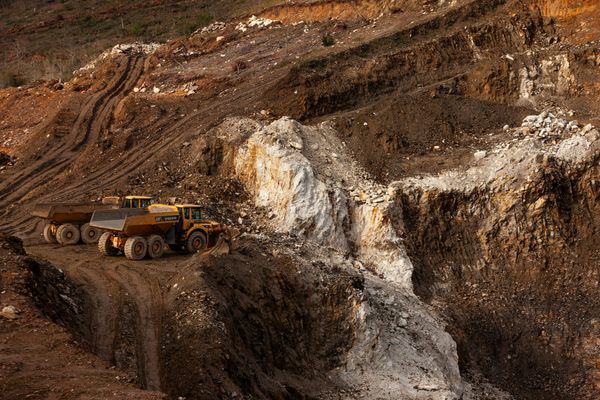
Washington Buys the Mine: Critical Minerals and the New Capitalism
The Department of Defense is now the largest shareholder in America’s only integrated rare earth producer. The arrangement is less a rescue than a prototype.





Industrial Policy
- Regional Feature
Southeast Asia’s ‘Downstreaming’ Strategy Risks Trading One Dependency for Another
Vietnam is pushing its rare earth sector up the value chain, seeking to capture more value from its reserves rather than export raw materials. But reliance on foreign capital could constrain national development goals.
- Public Affairs Dispatch
Economic Security First: Regulatory Chokepoints and the Coercive Turn in Industrial Policy
Industrial policy has re-emerged as a central tool for policymakers and is increasingly justified in terms of national security. Beneath this securitised framing lies a more specific logic: state-led engineering of physical chokepoints.
- Regional Feature
The Passport Problem: Can ASEAN Control Critical Minerals It Cannot Fully Trace?
South-East Asia’s mineral leverage will increasingly depend on whether its data can cross the same borders as its nickel, lithium and battery materials.
- Business Dispatch
Aligning Firms to the State: The Mining Sector Under Geopolitical Pressure
Firms respond differently to geopolitical pressures: Chinese firms align with state priorities, US firms adapt to policy incentives, and Indonesian firms pursue upgrading.
- Sectoral Feature
Semiconductor Packaging: How the Nexperia Case Exposed a Technological Chokepoint
The Nexperia saga, in which China imposed export controls on European-made chips sent to China for testing and packaging, shows how Chinese dominance in the sector creates an overlooked technological chokepoint.
- Scientific Dispatch
Detecting the Weaponisation of Chokepoints: Economic Intelligence Methodology
Public debate on economic coercion still looks at ports and sanctions lists. The leverage sits several supply-chain tiers below, in opaque and irreplaceable suppliers.




Data & Technology
- Regional Feature
The Race to Connect Africa Has Moved Into Orbit
Satellite broadband in low Earth orbit offers Sub-Saharan Africa a route past a connectivity deficit that has limited growth.
- Business Dispatch
The Geopolitical Fragmentation of the Corporate Cloud
For more than two decades, the architecture of the digital economy rested on the premise of borderless data. That premise is dissolving.
- Scientific Dispatch
The Green Transition has an Illegal Mining Problem
Critical minerals are now at the centre of the green transition, but their origin is often difficult to verify. Poor traceability creates opportunities for criminal groups to profit from the same supply chains.
- Sectoral Feature
Europe’s Grid Electrification Collides with a Steel Shortage
A shortage of steel is creating a severe operational bottleneck across the single market as it embraces electrification and AI
- Business Dispatch
The Digital Euro: Europe’s Insurance Against Payment Dependence
As an ever larger share of everyday commerce moves online, Europeans must rely on private money and private payment networks.
- Regional Feature
The Red Sea Crisis Heralds a New Age of Maritime Shipping
Vessel behaviour, route choices, port calls, and supply-chain performance have all been affected by the crisis, with implications extending far beyond the immediate conflict zone.